


Copyright (c) 2023 Publicaciones e Investigación

This work is licensed under a Creative Commons Attribution-NonCommercial-NoDerivatives 4.0 International License.
When the Publicaciones e Investigaciones Journal receives an original study or article from its author(s), whether by email, postal service, or the platforms available for said purpose, know that it may be published in physical or electronic formats in national or international archives, databases, or SIRES. As such, Publications and Research authorizes the reproduction and citation of said material, provided that the description of information is carried out in conformity with bibliographic norms, and mention the corresponding names, authors, article, issue, and pages. Publications and Research, in advance, expresses that the information, concepts, and methods are the responsibility of the author(s). As such, the UNAD does not have any influence whatsoever over that expressed in the manuscript.
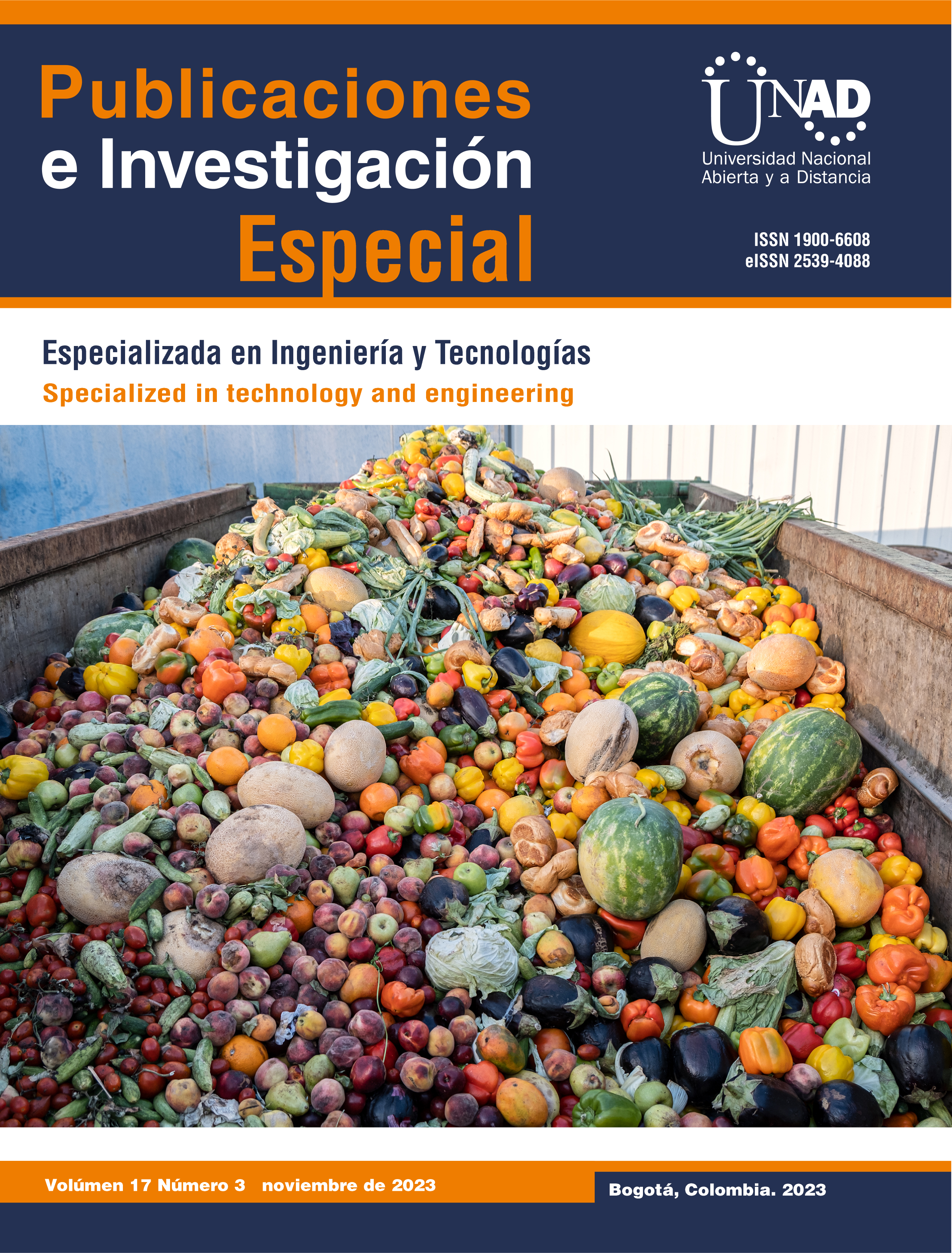
Generation and reduction of food losses and waste. Learning from the Master's Degree in Sovereignty and Food and Nutritional Security at the National University of Colombia
Food loss and waste (FWL) has been gaining visibility in the Latin American academic and political agenda as a problem of great magnitude, with serious environmental, ethical, social and economic repercussions, but at the same time policies, strategies and actions are being generated to contribute to its reduction and incidence.
The Master's Degree in Sovereignty and Food and Nutritional Security of the National University of Colombia has not been oblivious to this situation and since its creation in 2015 has been studying the issue from research conducted by students and professors from various disciplines, analyzing its causes, repercussions and alternatives for the reduction of FLW in different spaces, including the losses generated in the processes of production and distribution of creole potatoes in Nariño and Cundinamarca and vegetables in the Central Zone of Chile, as well as the waste occurring in the largest public school educational institution in Bogotá and in two educational institutions in the capital municipality of Arauca.
The lessons learned through the participatory research processes gather the experiences and perceptions of those who are related to FLW from the production, distribution and consumption of food, and provide new perspectives and strategies to contribute to achieve their reduction and sustainable management.
How to Cite